Time For A Resolution Or Two

It’s 2020, the future seems right around the corner. What did people in the past predict about the world we now live in?

  • In a lecture at the Royal College of Surgeons of England in 1911, a surgeon by the name of Richard Clement Lucas made a curious prediction: that the “useless outer toes” will become used less and less, so that “man might become a one-toed race.” “This Little Piggy” would get a whole lot shorter!
  • The RAND Corporation predicted that by the year 2020 it may be possible to breed intelligent species of animals, such as apes, that will be capable of performing manual labor.
  • Robots are the typical prediction for the future—and technically, we do sort of have robots now. But global trends expert Ariane Van de Ven had some bigger ideas for 2020. She explained “there will be more robots used as therapists, companions, assistants, and even friends to help people in their everyday,” according to The Next Web.

“Good resolutions are like babies crying in church. They should be carried out immediately.” ― Charles M. Sheldon

Have you given up making New Year resolutions? This seems like a significant year. What should be on your list (if you were to make one?)

I read on the bottle that V8 has three servings of vegetables. I’m going to drink a can each day. Maybe the spicy variety tastes better?

It wasn’t very sturdy upholstery to start with, but when you’ve worn out your chair in front of the TV it’s time to get up off your rear and move more!

I’ve already started getting rid of possessions that I don’t need or use.

Wonder if I can stick with just one of these three months from now?

Your resolutions for 2020 may not work if:

  1. You make them too big – start with smaller bites (eat that elephant one bite at a time)
  2. Your resolutions are too vague, “2020 is the year of getting healthier” – what does that mean or look like? Think of something specific that you change, start there and then soon after, pick something else.
  3. Sometimes we let other people make our resolutions for us, we try to keep them happy, but our own heart/will isn’t really in it. Only goals and changes that you desire stand a chance of actually coming about.

Let me suggest a wonderful resolution that I’ve been working on the past several months. Not so much to fix my life so that I live problem free, but to stop worry so much about all the problems I do face. I’m not living my life alone. I’m never going to live problem free. But maybe I can reduce the worry and stress. Think about this as a resolution for 2020:

Stop Worrying So Much

Don’t worry and say, ‘What will we eat?’ or ‘What will we drink?’ or ‘What will we wear?’ The people who don’t know God keep trying to get these things, and your Father in heaven knows you need them. Seek first God’s kingdom and what God wants. Then all your other needs will be met as well. So don’t worry about tomorrow, because tomorrow will have its own worries. Each day has enough trouble of its own. (Matthew 6:31-34)

What I’ve been learning is not how to avoid the cares of life or to make them go away. Instead how to stop worrying about them. They are inevitable. I think that’s why in this teaching from Jesus he uses examples that everyone has to face every single day; eating, drinking and putting on your pants. I think what he’s teaching me is that my worrying about the cares of life doesn’t really accomplish anything but making me more miserable.

So, over the past several months, as my life has been in a kind of collapse I’ve been learning to not worry. Here’s what I think has helped:

  1. Knowing and experiencing the fact that I’m not alone. The cares of life haven’t gone away, but I’m surrounded by lots of people who love me, pray for me and bear me up when needed. Just knowing this removes so much of the constant anxiety that eats away at the spirit.
  2. What always helps is to honestly look back at my past. When I see that my life lived near to God has always been a time of far less worry, it helps manage today’s fears. I’ve been here before. I’ve lived to tell a story of success. I’ve not avoided the dark days, but I’ve gotten through them with God’s help.
  3. The need to have complete control over my life is an illusion and a waste of energy. There’s too much out there that just can’t be controlled. Ever find it necessary get somewhere in a hurry on a late Friday afternoon in Houston?  The better plan is to control yourself – love God, love others. Control what you can as best you can – you.

“What is the New Year but the perfect place to live out what we learned in the old year?” ― Craig D. Lounsbrough

What did you learn in 2019? What do you need to learn in 2020?


The Ghosts of Christmas

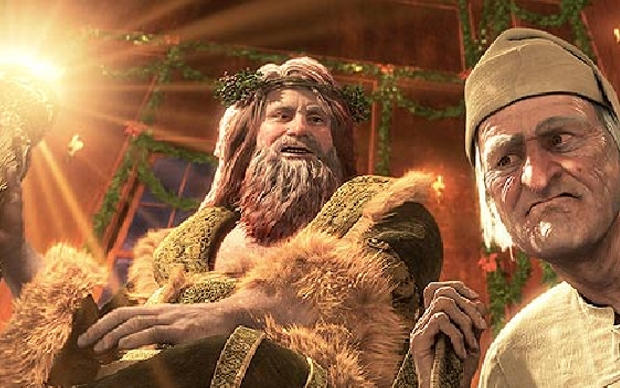
“You may be an undigested bit of beef, a blot of mustard, a crumb of cheese, a fragment of underdone potato. There’s more of gravy than of grave about you, whatever you are!”  ― Charles Dickens, A Christmas Carol

We live out each day surrounded by memories and in so many ways these mark out the pathway toward each one of our tomorrows.

“I can only note that the past is beautiful because one never realises an emotion at the time. It expands later, and thus we don’t have complete emotions about the present, only about the past.” ― Virginia Woolf

I’ve been in my house alone for four months. The TV going just so there’s background sounds on while I’m doing my chores. But there are other sounds in the house that seem to be haunting my days and nights. Some I can explain, others…

  1. I’ve written before about my haunted refrigerator that moans and groans. It causes my grandson to stop and look around when we are here together. He wonders who else is hiding in the house. It’s just our marked down appliance painfully making ice all day and night.
  2. Early this fall the derelict hot water heater in the attic had a spigot dripping. It could only be heard late at night by the rare overnight visitor in the guest bedroom underneath. It’s very old and I’m certain it’s going to go any minute. I’m just glad it’s not over my bed!
  3. There’s been a history of varmints in my attic. They are back for winter. This year the squirrels (above my bedroom) go in and out each morning and the opossum makes his exit at night. Lots of traffic to try and corral. They get noisy at times, late at night especially.

As Christmas decorations have gone up there are other haunting spirits that speak, sometimes softly and at other times very loud. My house is now even more bathed in memory. Christmas was my wife’s favorite time of year. It’s a season filled with treasures of memory to take me with joy into days, weeks and months ahead.

This time of year can bog any of us down with urgent tasks that must get done. There are events, festivities and family gatherings crowding the calendar. Extra meals, gifts and decorations must all be purchased and prepared. Despite online, curbside and next day, our days remain fraught with increased activity. Year after year, nothing seems to change.

This year, stop and sit down for a few minutes each day and collect your memories. Write something down in a journal. Make a list in your phone. Like treasures, arrange them in your heart so that you don’t miss any part of this holiday and new year. Don’t let your busyness steal away those moments so important to remember.

Researchers have long known that (1) your current mood influences what you file away about your experiences into your memory. If you are in a perpetual bad mood, you will tend to only remember your negative experiences.  And (2) your current mood tends to determine what kinds of memories you retrieve. If you’re in a general good mood, you will tend to pull up only positive memories from the past.

This means our memory making and retrieving are influenced by our emotional feelings and attitudes. 

“He was consious of a thousand odours floating in the air, each one connected with a thousand thoughts, and hopes, and joys, and cares, long, long, forgotten.” ― Charles Dickens, A Christmas Carol

What is it that’s always floating in the air about you? What treasured memories are worth holding onto? That bad mood is going to poison not just today but your future as well.

“Our memory is a more perfect world than the universe: it gives back life to those who no longer exist.” ― Guy de Maupassant

You will of course create new memories this holiday. I am only urging you to stop with those you love and be more intentional about remembering bits and pieces of your past. Share a laugh, get the details right, and cry a little. Use these to hang on to all that really matters from days gone by. This will keep you in a happy mood, and it will lock away the good stuff for a rich future (for you and everyone else).

“I will live in the past, the present, and the future. The spirits of all three shall strive within me.” ― Charles Dickens, A Christmas Carol

What if This Were Your Last Christmas?

Teach us to use wisely all the time we have.  – Psalm 90:12 (Contemporary English Version)

I’m not trying to be morose, but instead eager to challenge all of us to be more intentional about making the moments in our life count.

“Forever is composed of nows.” ― Emily Dickinson

If this were your last Christmas, who would you want to be sure to spend time with?

If it’s not too late, when you are planning your holiday agenda think about the people that you need to connect with. Surely there’s a name or two on your heart right now. Someone who needs some time with you.

Maybe all it takes is a phone call (remember those?).  A good old fashioned note or card can make up for so much distance. Why not share your real self with someone who’s drifted away?

What about those holiday obligations that really hold no meaning for you? Why waste time with social engagements filled with strangers? Who is it that means the most to you? That’s the list you ought to be making and checking twice.

Who is it that needs a little more time from you this year?  There will always be a “Last Christmas” person in your life who needs a little more of your time, effort and love. It will be worth it. You already know that people last longer than any present under the tree.

“When you have once seen the glow of happiness on the face of a beloved person, you know that a man can have no vocation but to awaken that light on the faces surrounding him. In the depth of winter, I finally learned that within me there lay  an invincible summer.”  ― Albert Camus

If this were your last Christmas, what would you want to be sure to talk to others about?

There’s always something on the “do not bring up” list when families and close friends get together infrequently. That’s not really what I mean by this question. When we spend time with people that count the most to us we often don’t talk about things that really matter. This isn’t necessarily deliberate. We are swept up in social norms that can keep us at a distance. There are unwritten rules about saying too much that might frighten someone else off or make us appear too vulnerable.

Everyone needs to hear how much they mean to you and how much they are loved. None of us ever hear this enough. That’s the only gift that ever matters in the end.

If this were your last Christmas, what kinds of unwritten rules would really matter to you? Which rules are you and I following that ultimately keep us from building  deep bonds with others? Telling someone the truth about how much they mean makes that truth become ever more real.

“Happiness, not in another place but this place…not for another hour, but this hour.”  ― Walt Whitman

What do you need to say to someone this year? It can be as simple as saying “you’re life matters to me.”

If this were your last Christmas, what would you leave behind (stop wasting time with)?

“Are not half our lives spent in reproaches for foregone actions, of the true nature and consequences of which we were wholly ignorant at the time?”  ― Herman Melville

What are the actions, words and habits that keep getting in the way of what you really need to accomplish? We spend too much time in backwashes of regret simply because we don’t or won’t make adjustments to the simple practice of how we live each day.

You’re not going to have time to spend with others until you stop spending time on other things. You won’t talk about things that matter unless you think about them ahead of time. Leave behind what never matters so that you can be certain to grab the moment before you.

The largest obstacle to making moments count in our lives are the fears we imagine. Fears about what others might think. The overwhelming need to keep safe our own fragile ego. And another moment has slipped past, because we couldn’t leave behind our protective armor.

Teach us how short our life is, so that we may become wise. -Psalm 90:12 (Good News Translation)

What if this was your last Christmas?

Don’t let this Christmas get wadded up and pitched out with the used up wrapping paper. Nothing dramatic, just make it a point to be intentional with your time and attentions.

Who do you need to make contact with? What do you need to communicate to others? What bonds needs to be strengthened? What needs to be accomplished today before it slips away forever?

“The older one gets, the more one feels that the present moment must be enjoyed, comparable to a state of grace.”  ― Marie Curie

Jumping in With Both Feet

I did it again the other day.

I jumped to conclusions again.

I blamed people – always out to get me, always trying to do the wrong thing.

When I thought about it, when I heard the whole story, I was embarrassed…again.

Of course no one was trying to do me any harm. It was only a series of odd events that just lined up wrong.

“Be careful of what you assume, what you assume often becomes what you consume” ― Constance Friday

I teach students and friends that blaming people (and their character) is not the best first step to take.  Usually it’s the situation that’s the cause of things. But, I’m not always very good at taking my own advice. I too frequently jump to conclusions, believe the worst and seldom give the benefit of doubt to others.

Isn’t that the way it is with you? Emotions take control and feelings start to run our mouths. We start talking way ahead of our thinking (including reflecting and praying).

Why is it so difficult to give everyone else a break? This is actually a common phenomenon, a cognitive bias in human thinking that we all share. Correspondence Bias occurs when we believe other people mostly do what they do because of their dispositions (personality) and we attribute our own actions to the situations we encounter. She’s always late because of her lazy character. I’m late because there’s typically bad traffic at this time of day.

Do you see how this can cause all sorts of problems with other people we work with, in our families and even our close friends?

The best way to break free from this trap is first, become aware of it and then to start to pay more attention. Learning to pay more attention to the situations all around us that cause things to happen to everyone, like:

  • the dynamics of family
  • living in a hurry (too much on your plate)
  • insecure co-workers who keep dragging you into their drama
  • bad traffic on the way to work (and around your desk)
  • financial fears because there’s still so much that’s unknown about tomorrow

“I suppose it is tempting, if the only tool you have is a hammer, to treat everything as if it were a nail.” ― Abraham Maslow

Give other people a break, give yourself a break.

Stop using absolute language when talking about other people (always, forever, constantly, never, every time, etc.)

In the Gospel, Jesus challenges us to think about other people in a dramatically different way, “But I say to you, love your enemies. Pray for those who hurt you” (Matthew 5:44). Thinking and then challenging your old assumptions about relationships will do wonders for fixing cognitive biases.

And, it might do wonders for you, the next time you’re ready to jump in with both feet…to look before you leap!


On the Road Again

I watched a national tribute to Willie Nelson last night. I think it was a rerun. He ended the event by singing a few songs. The last one was his trademark, “On the Road Again.”  That’s all of our stories – that metaphor works. We are forever on a journey, heading down a road to somewhere.

These days I’m having the hardest time being at the right place at the right time. I’ve got all sorts of calendars, digital “invites” and reminders – but to no avail. I’m still waking up confused at least once or twice a day.

This makes me think about my larger and symbolic journey through life. What kinds of appointments am I missing with my destiny? Did I forget to show up for an important rite of passage? What day of my life is it right now?

“The only person you are destined to become is the person you decide to be.” ― Ralph Waldo Emerson

As I think about it (while going to get some lunch because I messed up my calendar and ended up with a very disordered day) it seems there are markers in my journey through life. We were on the side of the highway recently, asking for help on the phone and were told we needed to keep driving forward until we reached a mile marker. The help was no use until they knew right where we were.

This same truth applies to all of us. Until YOU know where you are on your journey (what day of your life is it right now?) you’re not going to get very far. Spend some time and be reflective. Start a journal. Talk with someone about things that matter. Take a long walk regularly and talk to yourself. Try and locate the “mile markers” in your present journey. Are you heading forward? Are you moving at the speed limit?  Keeping your eyes on the road? You’re going to always feel that sense of confusion or detachment if you continue to let your life drive on autopilot.

Your relationships all along the journey are essential to understanding where you are, where you’re going and who you are becoming. To end some of the confusion that may be plaguing your day in and day out – maybe you need to reconnect with the people the matter? What about listening instead of talking? How about some honest feedback, from someone who loves you, about where you’re heading? (Most people can’t give us this valuable help because we usually remain too private about our real selves, our hoods too tightly shut).

“Love is our true destiny. We do not find the meaning of life by ourselves alone – we find it with another.” ― Thomas Merton

What sort of goals have you set for yourself? As you pass each mile marker, you can tell that you’re heading the right direction if your actions are taking you toward specific goals already laid out. Most of us aren’t specific enough with our goals and that leaves us driving around in the dark or lost in the woods. We don’t know the next step because we never really nailed it down in the first place. Make a list of your goals and chart out the course your life should be taking. Big and very specific goals help you to see the markers along your way and which direction you’re heading.

I hope next week is better. I’m going to check my calendar twice to be certain. What I really hope to accomplish is pay better attention to my larger journey, take back the wheel from the autopilot more often and become accustomed to map reading.

“All the world’s a stage and most of us are desperately unrehearsed.”

― Seán O’Casey


A House Divided Gives Thanks

The past several years I have read to my Sunday School class President Lincoln’s declaration of the fourth Thursday in November as a national day of Thanksgiving. We always think about the Pilgrims, but it was Lincoln in the midst of the Civil War who created the holiday celebration we’ve just experienced together. What amazes me are the circumstances:

It was the mid point in the Civil War, but no one knew that.

His mother died of a terrible disease when he was nine and his beloved sister who cared for him died in childbirth ten years later.

He only had one full year of school.

At this time, two of his sons had died during childhood (another son would die of heart failure eight years later).

Abraham Lincoln is reported by many to have suffered from depression for most of his adult life. His wife Mary was later committed to a sanitarium due to her deteriorating mental condition.

Mary Todd came from a family that owned slaves and continue to during the presidency of Lincoln.

He worked each day in the White House, while across the street soldiers were being buried each day.

The sound of cannon fire could be heard from nearby conflict.

This family certainly had and continued to endure terrible hardships. I so often wonder how this great man was able to write the proclamation and to inspire his nation to remember all the reasons they had to give thanks.

A Proclamation

The year that is drawing towards its close, has been filled with the blessings of fruitful fields and healthful skies. To these bounties, which are so constantly enjoyed that we are prone to forget the source from which they come, others have been added, which are of so extraordinary a nature, that they cannot fail to penetrate and soften even the heart which is habitually insensible to the ever watchful providence of Almighty God. In the midst of a civil war of unequaled magnitude and severity, which has sometimes seemed to foreign States to invite and to provoke their aggression, peace has been preserved with all nations, order has been maintained, the laws have been respected and obeyed, and harmony has prevailed everywhere except in the theatre of military conflict; while that theatre has been greatly contracted by the advancing armies and navies of the Union. Needful diversions of wealth and of strength from the fields of peaceful industry to the national defense, have not arrested the plough, the shuttle or the ship; the axe has enlarged the borders of our settlements, and the mines, as well of iron and coal as of the precious metals, have yielded even more abundantly than heretofore. Population has steadily increased, notwithstanding the waste that has been made in the camp, the siege and the battle-field; and the country, rejoicing in the consciousness of augmented strength and vigor, is permitted to expect continuance of years with large increase of freedom. No human counsel hath devised nor hath any mortal hand worked out these great things. They are the gracious gifts of the Most High God, who, while dealing with us in anger for our sins, hath nevertheless remembered mercy. It has seemed to me fit and proper that they should be solemnly, reverently and gratefully acknowledged as with one heart and one voice by the whole American People. I do therefore invite my fellow citizens in every part of the United States, and also those who are at sea and those who are sojourning in foreign lands, to set apart and observe the last Thursday of November next, as a day of Thanksgiving and Praise to our beneficent Father who dwelleth in the Heavens. And I recommend to them that while offering up the ascriptions justly due to Him for such singular deliverances and blessings, they do also, with humble penitence for our national perverseness and disobedience, commend to His tender care all those who have become widows, orphans, mourners or sufferers in the lamentable civil strife in which we are unavoidably engaged, and fervently implore the interposition of the Almighty Hand to heal the wounds of the nation and to restore it as soon as may be consistent with the Divine purposes to the full enjoyment of peace, harmony, tranquility and Union.
In testimony whereof, I have hereunto set my hand and caused the Seal of the United States to be affixed.

Done at the City of Washington, this Third day of October, in the year of our Lord one thousand eight hundred and sixty-three, and of the Independence of the Unites States the Eighty-eighth.

By the President: Abraham Lincoln
William H. Seward, Secretary of State


When I read this  each year, it inspires me to put my life in perspective and to count my blessings and give thanks. What about you?

Who’s Following You Around?

Happy Thanksgiving 2019

I just figured out how to determine the number of people automatically receiving this blog each time it’s published.

We’re almost at #200.

“Happiness quite unshared can scarcely be called happiness; it has no taste.”

― Charlotte Bronte

If you’ve got some time, if you will scroll back to one of your favorite posts, send it to someone else. Send it to several others. Invite them to follow if they like what they read.

Thank you for this help.
RW


Hope is the Thing With Feathers
by Emily Dickinson

Hope is the thing with feathers
That perches in the soul,
And sings the tune without the words,
And never stops at all,

And sweetest in the gale is heard;
And sore must be the storm
That could abash the little bird
That kept so many warm.

I’ve heard it in the chillest land,
And on the strangest sea;
Yet, never, in extremity,
It asked a crumb of me.

Do You Need A Ride?

“No one is useless in this world who lightens the burdens of another.”― Charles Dickens

We were so exuberant as we left the game on Saturday night. It seemed everyone had stayed to the very end. That meant there were thousands pouring out of the stadium in the dark. When we got to my vehicle, I heard my friend John talking with someone on the other side. I couldn’t see her, but it was a female voice. She and her female friend were asking for a ride because their Uber didn’t show up. I think to Lorena or Bruceville-Eddy (locations south). I was getting in on the drivers’ side and I hollered through the vehicle, “We’re heading to Houston” (east).

As we inched our way out of the crowded parking lot full of cars and people we wondered about the strange interaction. (Bumping into odd characters only happens when playing certain teams each year.) We couldn’t figure out if it had been a real call for help or something else. Uber really would have had a hard time getting in to pick someone up!

Today I thought more about this encounter and wondered. All of us have times of need during the course of our lives. Surely there have been times in your life when you have had to ask or someone has asked you, “Do you need a ride?”

  1. At some point in our lives we are all going to have practical needs that we can’t solve ourselves. We just won’t be able to get from here to there. Sometimes these are the easiest kinds of problems to help with – they usually have simple solutions. That doesn’t mean that we will always have what it takes to give everyone a ride. But when we can, we ought to do whatever we can.
    Give someone a ride this week – you probably don’t even have to ask whey they need but know in your heart what little need you can help to meet.
  2. We will also have relational needs at some point in our living. We can’t make it on our own without a shoulder to lean on. We’re fools to think we can. We are admonished in the New Testament to help each other to bear our burdens. We need our friends and family to carry the loads that come with traveling the passages of life. It’s supposed to be normal to share these loads together.
    “Share each other’s burdens, and in this way obey the law of Christ. 3 If you think you are too important to help someone, you are only fooling yourself. You are not that important.”  – Galatians 6:2-3
    Give someone a ride this week – renew a relationship, do something anonymous, say a kind word, find some ways to encourage – there are people all around you who need the gift of friendship.
  3. And of course, maybe without realizing it, we each will encounter our own spiritual needs as we live out the transformation that God is always bringing about in us. We need teachers, mentors and encouragers as we work our way down the path of discipleship.
    Give someone a ride this week. You and I need to stop leaving others alone on that road and start opening our eyes to the ways we can mentor, pray, build up, teach, or strengthen. God’s work in others uses ordinary us all the time in supernatural ways. 

“Each day we stood almost shoulder to shoulder, occupying the same space, breathing the same air, but we remained strangers.” ― M.A. Stacie

Tomorrow, look around you, there are people near who are trudging through dusty and hard roads. People who need a ride. But we’re too often afraid to stick our neck out. There’s a phenomenon called The Diffusion of Responsibility, the more people standing around during an emergency the less likely any single person feels responsible to help. Maybe we are living too crowded with associates and aren’t building enough genuine closeness? When the bottom falls out, as it always does, there are so many acquaintances but not enough real friends who feel responsible to step in and give you a ride.

What could you do this week to draw a step closer to one of your friends?

To put another nail in building that bridge of responsibility?


“Life’s great happiness is to be convinced we are loved.” ― Victor Hugo


Dads Seem to Matter

“Blessed indeed is the man who hears many gentle voices call him father.”― Lydia Maria Child (abolitionist)

In my family class right now we are studying the phenomenon of fatherlessness in America. I think it’s difficult for most of my students – who grew up without a father – to learn about how devastating this choice has been for children and our society. It’s a personal situation that’s already happened that you can’t do anything about right now. So, we try and focus attention on the future – making thoughtful decisions about our families that are to come.

“I believe that what we become depends on what our fathers teach us at odd moments, when they aren’t trying to teach us. We are formed by little scraps of wisdom.”  ― Umberto Eco (author)

Children in America today who live in fragmented families – without both parents – are more likely to experience:

  • poor learning in school
  • less time spent on homework
  • health problems
  • less preventative healthcare
  • economic hardship
  • loss of friendships
  • early initiation into sexual activity
  • emotional and psychological stress/anxiety
  • conflict within the family
  • loneliness
  • early launch out of home
  • abbreviated childhood
  • prolonged adolescence

Our divorce rate is not really on the rise. Living together has become the new norm. Women are waiting longer to have children. The number of children in each family has been shrinking (the White birthrate is now below the replacement level). While most couples who live together plan on getting married, most children in American today are NOT living with their biological mother and father. Single parenthood, by choice is on the rise. When you hear the term “single parent” historically it almost always referred to a single mother. But that is changing – today, single fathers comprise almost 1/4 of all single parent households (in 1960 it was 14%).

“An almost perfect relationship with his father was the earthly root of all his wisdom. From his own father, he said, he first learned that Fatherhood must be at the core of the universe. [speaking of George MacDonald]” ― C.S. Lewis

Sociologist David Popenoe has written that,

The decline of fatherhood is one of the most basic, unexpected, and extraordinary social trends of our time. Its dimensions can be captured in a single statistic: in just three decades, between 1960 and 1990, the percentage of children living apart from their biological fathers more than doubled, from 17% to 36%. By the turn of the century, nearly 50% of American children may be going to sleep each evening without being able to say good night to their dads.

What about our fathers? Are they really necessary? Couldn’t anyone share in the responsibilities of helping to raise children? Childcare workers, pre-school, relatives, friends?

In his book Life Without Father, Popenoe writes,

Fathers are far more than just “second adults” in the home. Involved fathers – especially biological fathers – bring positive benefits to their children that no other person is as likely to bring. They provide protection and economic support and male role models. They have a parenting style that is significantly different from that of a mother and that difference is important in healthy child development.

He believes that there is something unique that fathers provide to families and especially to their children.

What do you think?


“Then came the reflection, how little at any time could a father do for the wellbeing of his children! The fact of their being children implied their need of an all-powerful father: must there not then be such a father? Therewith the truth dawned upon him, that first of truths, which all his church-going and Bible-reading had hitherto failed to disclose, that, for life to be a good thing and worth living, a man must be the child of a perfect father, and know him. In his terrible perturbation about his children, he lifted up his heart—not to the Governor of the world; not to the God of Abraham or Moses; not in the least to the God of the Kirk; least of all to the God of the Shorter Catechism; but to the faithful creator and Father of David Barclay. The aching soul which none but a perfect father could have created capable of deploring its own fatherly imperfection, cried out to the father of fathers on behalf of his children, and as he cried, a peace came stealing over him such as he had never before felt.” ― George MacDonald

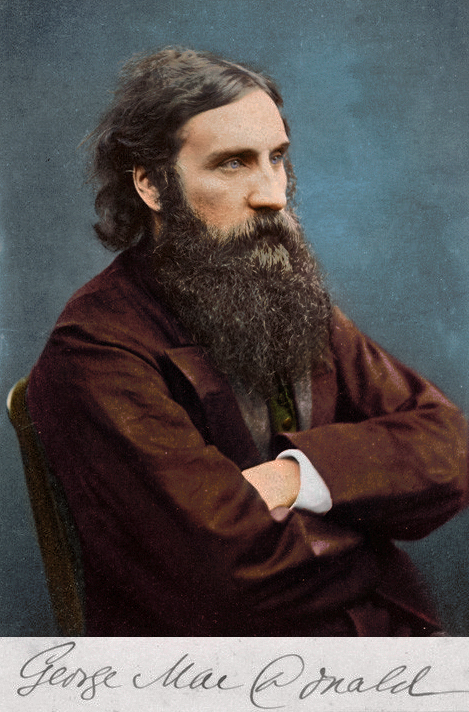
George MacDonald was a Scottish author, poet, and Christian minister.

He was educated at Aberdeen University and after a short and stormy career as a minister at Arundel, where his unorthodox views led to his dismissal, he turned to fiction as a means of earning a living. He wrote over 50 books.

Known particularly for his poignant fairy tales and fantasy novels, MacDonald inspired many authors, such as G.K. Chesterton, W. H. Auden, J.R.R. Tolkien, C. S. Lewis, and Madeleine L’Engle. Lewis wrote that he regarded MacDonald as his “master”: “Picking up a copy of Phantastes one day at a train-station bookstall, I began to read. A few hours later,” said Lewis, “I knew that I had crossed a great frontier.” G. K. Chesterton cited The Princess and the Goblin as a book that had “made a difference to my whole existence.”

Elizabeth Yates wrote of Sir Gibbie, “It moved me the way books did when, as a child, the great gates of literature began to open and first encounters with noble thoughts and utterances were unspeakably thrilling.”

Even Mark Twain, who initially disliked MacDonald, became friends with him, and there is some evidence that Twain was influenced by MacDonald.

How Are Ya Doin’?

I’m hearing this a lot that these days.

I often think about that question. Sometimes I want to ask back, do you really want to know?  Some people do. Others are being friendly and are just passing by. I think most fall somewhere in between.

Most of the time the best answer is a polite, “just fine, how are you?”

Lately I tell people, “I made it to today, that seems pretty good so far.”

Rarely, but every now and then, I just tell the truth and say, “terrible, but maybe things will get better.”

It always depends on who’s asking, the look in their eyes, and the tone of their heart.

How are YOU doin’ these days?

Are you wagging more and barking less?

Are you keeping plenty of people to love very near?

Do you let all that bad stuff just run down and never soak in?

Are you keeping your eyes on today, never missing a chance that God puts in your path?

Smiling at every face that comes into sight, stranger or not?

Putting your problems aside and thinking about someone else as often as you can – telling ’em as quickly how much they mean to you?

“It isn’t what you have or who you are or where you are or what you are doing that makes you happy or unhappy. It is what you think about it.” ― Dale Carnegie (I couldn’t resist)

The holidays are right around the corner. That’s when some people feel really awful. When someone near to you (at work, down the street, in the next pew, at the end of a phone call) needs to hear, “how are ya’ doin’?” And somehow know that you really want to hear the truth.

Your own bad situation is going to fade away when you start to find ways to take care of someone else’s. It works every single time!

Someone needs you right now, but may never ask

So…how about instead of asking that polite question again and again…you just assume that everyone you meet is probably having (or soon will) a hard time about something. How about you find something encouraging to say that’s personal? How about you pray (really!) for people you pass on the road of your life? How about you find a secret way to lift up people you hardly know who may not hear enough good news?

“How should we be able to forget those ancient myths that are at the beginning of all peoples, the myths about dragons that at the last moment turn into princesses; perhaps all the dragons of our lives are princesses who are only waiting to see us once beautiful and brave. Perhaps everything terrible is in its deepest being something helpless that wants help from us.

So you must not be frightened if a sadness rises up before you larger than any you have ever seen; if a restiveness, like light and cloudshadows, passes over your hands and over all you do. You must think that something is happening with you, that life has not forgotten you, that it holds you in its hand; it will not let you fall. Why do you want to shut out of your life any uneasiness, any miseries, or any depressions? For after all, you do not know what work these conditions are doing inside you.”  ― Rainer Maria Rilke

******************************

“Look, if you sold a few sparrows, how much money would you get? A copper coin apiece, perhaps? And yet your Father in heaven knows when those small sparrows fall to the ground. You, beloved, are worth so much more than a whole flock of sparrows. God knows everything about you, even the number of hairs on your head. So do not fear.”  – Jesus in Matthew 10:29-31 (The Voice)

God needs you to spread the encouragement, blessings and love of friendship. He needs you to help drive out the fear that haunts so many around you. He needs you to help become part of the answer to “How Ya Doin’?”